Compassion
Care, empathy, and understanding for every person served.
Our story
Joyce Angulo Foundation is a community-based organisation serving Lira City, Northern Uganda.
Joyce Angulo is a retired registered nurse whose life and career have been dedicated to caring for vulnerable women, children, girls, persons with disabilities, and older people. She witnessed the effects of domestic violence, poverty, war, and exclusion on families.
As a single mother, she invested in her children’s education while mentoring women and girls in healthcare. The Foundation carries that spirit of service into community-based support.
To provide comprehensive support through healthcare support, counselling, educational opportunities, life skills, mentorship, advocacy, and community-based care; and to promote the rights, dignity, wellbeing, and participation of vulnerable people.
Safe, supportive, and self-reliant communities where vulnerable people can live with dignity, hope, and opportunity, and older people receive respect, care, and equal opportunities.
A community that cares
Programme 5 of 7 · Article 5, Objective 5
Helping families and volunteers provide safer, more respectful everyday care.
Older people may rely on relatives, neighbours, or volunteers for daily support. JAF’s proposal identifies a need to strengthen the people providing that care, particularly where illness, disability, mental health concerns, or limited resources make care more demanding.
Willingness to help needs to be supported by practical knowledge. Families and volunteers may need guidance on nutrition, hygiene, respectful communication, disability inclusion, safeguarding, and recognising when professional help is required.
Caregiver and family training is an explicit Article 5 programme and a defined activity in JAF’s proposed care model. Joyce Angulo’s nursing and mentorship background informs the Foundation’s approach. Completed training sessions and numbers of trained caregivers have not yet been reported for this website.
JAF plans to train family members, community caregivers, and volunteers in basic elderly care. The programme will put dignity, safe practice, and the older person’s needs and choices at the centre of support.
Turning the response into action
What this programme aims to change
These are intended outcomes and proposed monitoring measures, not reported results.
Help build a community where older people feel valued, included, and supported.
Programme 1 of 7 · Article 5, Objective 1
Finding older people whose needs are overlooked, so support begins with an understanding of their circumstances.
JAF’s programme proposal identifies older people who live alone, have chronic illnesses or disabilities, lack reliable income, or care for vulnerable grandchildren. Their medical, emotional, social, and material needs may remain unseen when they cannot easily reach services or ask for help.
The proposal identifies limited community data on older people in need. Without a consistent way to identify people and understand their circumstances, support can miss isolated households and urgent needs can remain unrecognised.
JAF’s documented home visits provide a starting point for understanding people’s circumstances face to face. Article 5 makes community mapping a specific programme priority. A completed community register or baseline assessment is not yet reported in the materials available for this website.
JAF plans to conduct community mapping and a baseline assessment in selected communities, identify vulnerable older people, and register their needs with informed consent. This will help connect identified needs with home visits, practical assistance, and appropriate referrals.
Turning the response into action
What this programme aims to change
These are intended outcomes and proposed monitoring measures, not reported results.
Help build a community where older people feel valued, included, and supported.
Community support
Home visits, shared moments, and seasonal packages connect practical support with companionship.
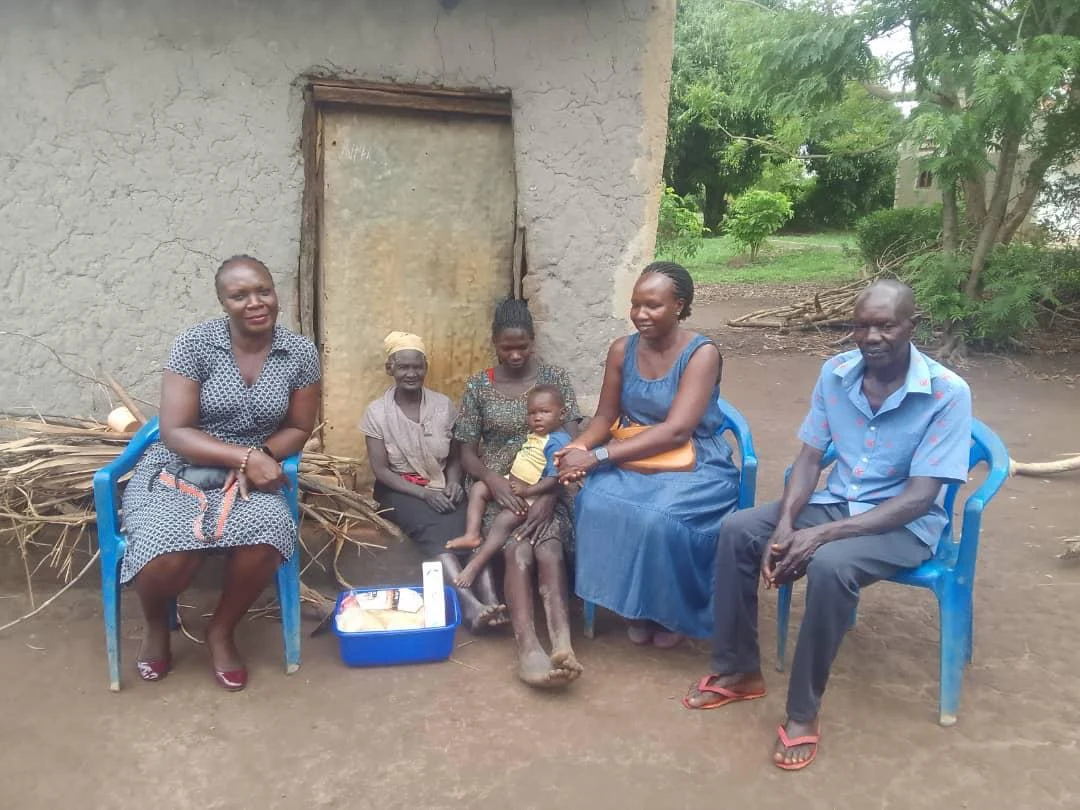
A visit at home
The Foundation’s community photographs document a visit to Imat Aida’s home to deliver her Easter package. Home visits make space for connection, listening, and time together.
Seasonal giving
Community members gathered with Christmas packages reflect the Foundation’s practical support work. Further support depends on available resources and identified needs.
To discuss contributing food, hygiene items, clothing, or other household essentials, contact the Foundation before arranging delivery.
Ways to support ↗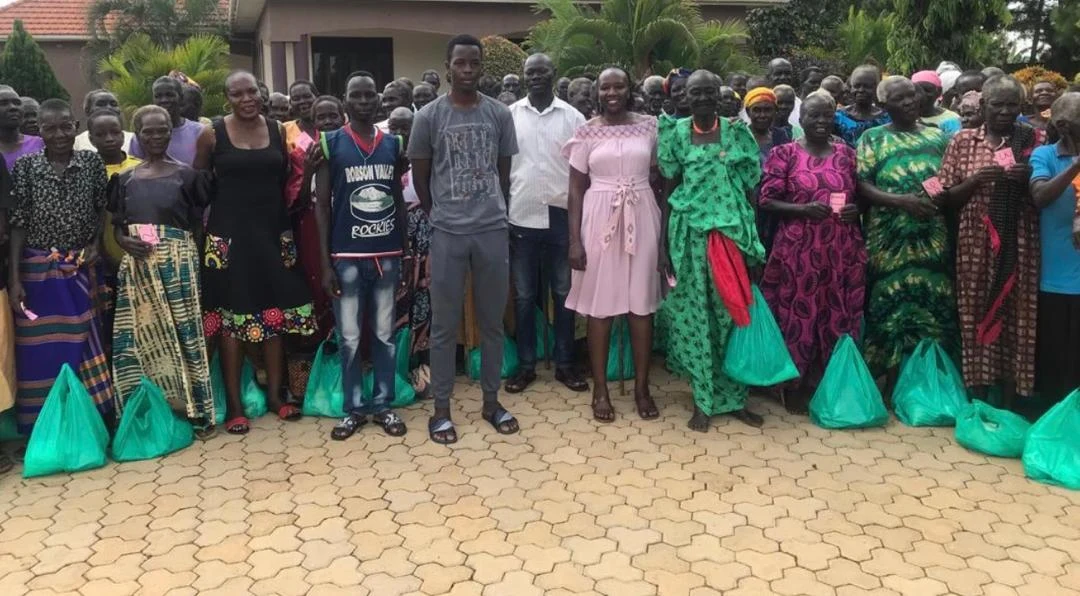
Contact & location
Visit or write to the Foundation’s office in Lira City to discuss support, volunteering, and partnerships.
Our office address
Map search shows the area, not a verified office pin.
Office hours and direct telephone and email details are not yet published here. Please arrange visits through an existing Foundation representative where possible.
Include your organisation’s name, the type of support you are considering, and how the Foundation can reach you in your written correspondence.
Explain the general type of support you are asking about. Avoid sharing private medical records or sensitive personal details through public channels.
This website is not an emergency response service. For immediate danger or urgent medical needs, contact local emergency services or the nearest appropriate health facility.
Programme 6 of 7 · Article 5, Objective 6
Using practical digital tools to help care teams organise visits, follow up, and learn.
The Foundation’s proposal identifies limited community data and weak referral systems. As care involves more households and volunteers, registration, visits, changing needs, and follow-up information need to be organised and kept confidential.
A visit or referral has limited value if the next person supporting the household cannot follow up appropriately. The gap is a simple, secure way to coordinate care and report progress without excluding older people who have limited phone access or literacy.
JAF’s proposal specifies digital registration, visit monitoring, referral tracking, and reporting. Possible tools include mobile data collection, a simple dashboard, and assisted reporting. A live JAF care-management system or completed digital rollout is not claimed on this website.
JAF plans to develop or adapt affordable digital tools for registration, follow-up, referral tracking, monitoring, and reporting. Volunteers will assist with records while face-to-face care continues, so technology supports access rather than becoming a requirement for help.
Turning the response into action
What this programme aims to change
These are intended outcomes and proposed monitoring measures, not reported results.
Help build a community where older people feel valued, included, and supported.
Proposed programme · Seeking support
A community-based care model designed to help older people live healthier, safer, and more connected lives in Lira City.
The Foundation is seeking support to establish a structured elderly-care programme. It brings together regular home visits, practical assistance, psychosocial support, and connections to health and social services.
The programme is proposed; the activities below describe the planned model, rather than a claim that every service is already operating.
The care model brings together the seven programmes established under Article 5 of the constitution.
Explore all seven programmes →More consistent care, less isolation, stronger family support, and better access to services. Planned monitoring includes visits completed, referrals followed up, caregiver training, and beneficiary feedback.
A community that cares
Looking ahead
The Foundation’s long-term plans extend care into skills, safety, and stronger community resources.
A proposed community training centre would offer access to sewing machines, hair salon equipment, and computers, supporting practical skills and mentorship for women, girls, and youth.
The long-term vision includes a holding centre or shelter for survivors of domestic violence before reintegration into the community, alongside connections to appropriate support services.
The Foundation also aspires to support shallow wells and boreholes in vulnerable communities.
These are long-term plans, dependent on funding, partnerships, and implementation arrangements. They are not presented as existing facilities or currently available services.
Programme 3 of 7 · Article 5, Objective 3
Helping older people connect to healthcare and meet essential everyday needs.
JAF’s proposal identifies limited access to healthcare and medication, food insecurity, inadequate household essentials, and difficulty travelling to health facilities. Older people with chronic illness or disability may face several of these challenges at once.
Identifying a health need is not the same as helping someone reach care. Transport, referral follow-up, food, hygiene materials, and other basic items can remain missing between the household and the services it needs.
JAF’s photographs document Easter and Christmas packages and community visits. These provide evidence of practical support. The broader medical support, health education, and coordinated referral activities are set out in the programme proposal; completed clinical services and referral results are not claimed here.
JAF plans to help older people access appropriate healthcare through referrals, follow-up, health education, and coordination with health workers. Where resources allow, it will also provide food and essential non-food items to people in greatest need.
Turning the response into action
What this programme aims to change
These are intended outcomes and proposed monitoring measures, not reported results.
Help build a community where older people feel valued, included, and supported.
Programme 2 of 7 · Article 5, Objective 2
Bringing care and companionship closer to older people, in the places they call home.
Older people living alone or with mobility challenges may struggle to reach community activities and services. JAF’s proposal describes households facing illness, disability, loneliness, and limited family support, where everyday needs can go unnoticed.
A single visit or occasional gift cannot provide the consistency of regular care. The gap is an organised system of trained visitors, repeat contact, and follow-up when health, wellbeing, or protection concerns arise.
JAF has documented community visits, including a visit to Imat Aida’s home to deliver an Easter package. These activities demonstrate personal contact and practical support. A regular trained-volunteer visiting schedule is part of the proposed expansion.
JAF aims to establish regular home visits by trained community volunteers and caregivers. Visits will combine companionship with wellbeing checks, awareness of hygiene and nutrition, recognition of concerns, and connections to appropriate services.
Turning the response into action
What this programme aims to change
These are intended outcomes and proposed monitoring measures, not reported results.
Help build a community where older people feel valued, included, and supported.
Standing alongside older people and vulnerable families in Lira City, Northern Uganda, with practical support and human connection.
Our community
Our guiding purpose
Registration: 26/LCC/024
People supporting people
Founded by retired registered nurse Joyce Angulo, the Foundation brings a personal commitment to the wellbeing of older people, women, children, persons with disabilities, and vulnerable families.
We believe care begins by listening, showing up, and helping people remain connected to the communities they call home.
Discover our story →Safe, supportive, and self-reliant communities where vulnerable people have hope and opportunity, and older people receive respect, care, and equal opportunities.
Our missionTo support vulnerable people through healthcare support, counselling, education, life skills, mentorship, advocacy, and community-based care.
Care, empathy, and understanding for every person served.
Supporting people to shape their lives and futures.
Promoting protection from abuse, violence, and neglect.
Building connections that nurture dignity and belonging.
A stronger circle of care for older people in Lira City.
Our proposed structured care programme brings home visits, practical assistance, caregiver training, and connections to services together.
Planned regular visits and companionship.
Helping people connect to appropriate health and social services.
Training and support for families and volunteers.
Seven connected priorities, drawn from Article 5 of our constitution. Explore the problem, the support gap, and JAF’s response for each.
Finding older people whose needs are overlooked, so support begins with an understanding of their circumstances.
Problem, gap & JAF’s response →Bringing care and companionship closer to older people, in the places they call home.
Problem, gap & JAF’s response →Helping older people connect to healthcare and meet essential everyday needs.
Problem, gap & JAF’s response →Creating opportunities for older people to be heard, included, and connected.
Problem, gap & JAF’s response →Helping families and volunteers provide safer, more respectful everyday care.
Problem, gap & JAF’s response →Using practical digital tools to help care teams organise visits, follow up, and learn.
Problem, gap & JAF’s response →Building a locally rooted model that can support more communities over time.
Problem, gap & JAF’s response →Share your time, skills, resources, or ideas.
Discuss community visits, companionship, and volunteering.
Explore volunteering →Help with essential items and the development of community care.
Ways to support →Explore how your professional experience can contribute.
Share your expertise →Bring your organisation into a conversation about meaningful support.
Start a conversation →Help build a community where older people feel valued, included, and supported.
Community mapping; home visits; healthcare and essential support; social connection; caregiver and family support; digital care coordination; and sustainable community care development. Each programme follows one objective in Article 5 of the constitution.
The Foundation is based in Telela Village, Boroboro East Ward, Lira City, Uganda. Its community-based work is rooted in Northern Uganda.
Joyce Angulo, a retired registered nurse, founded the organisation. Pamella Adong is the co-founder and Barbara Apio serves as General Manager.
The structured care programme is a proposal seeking funding and partnerships. The Foundation’s photographs separately document home visits and seasonal support.
You can discuss volunteering, skills, in-kind support, or partnership with the Foundation. Online payments are not currently collected through this website.
The Governance & Registration page provides the supplied Lira City CBO registration certificate and information about the Foundation’s constitution.
Get involved
Time, skills, practical resources, and thoughtful partnerships can strengthen a community’s circle of care.
Discuss opportunities in community visits, companionship, outreach, and programme support. Activities depend on current needs, coordination, and safeguarding arrangements.
Health workers, counsellors, caregiver trainers, and technology professionals can explore how their skills might contribute to the proposed care model.
We welcome discussions with local authorities, health facilities, community groups, faith-based organisations, and funding partners.
Tell the Foundation what you would like to contribute, where you are based, your availability, and any relevant experience. Please avoid including confidential information about beneficiaries.
Find our office ↗Support must protect people’s dignity, choices, and privacy. Volunteers and partners should discuss safeguarding expectations before beginning any community activity.
Our safeguarding approach ↗A community that cares
Website information
Last updated 17 October 2026
This website introduces Joyce Angulo Foundation and its community work. It has no contact submission form, visitor account system, or online payment collection.
The site code does not set advertising or analytics cookies, use tracking pixels, or store visitor details in browser storage. Hosting infrastructure may process technical information such as IP addresses, requests, and security logs to deliver and protect the site. The hosting platform may apply its own access controls and privacy terms.
Links to Google Maps open an external service. Its privacy practices apply when you follow those links. Maps are not embedded in this site.
If you contact the Foundation directly, provide only information needed for your enquiry. Do not send medical records, payment credentials, or sensitive information about another person without an appropriate agreed channel and authority.
Respect for dignity, informed consent, and confidential handling of personal information are part of the proposed programme’s safeguarding approach. If you are concerned about a photograph or information on this website, contact the Foundation at the office address below to request review.
Write to Joyce Angulo Foundation, Telela Village, Boroboro East Ward, Lira City, Uganda.
This notice should be updated before adding forms, analytics, advertising measurement, or payment processing, to explain those services and any required choices.
Article 5 · Seven connected programmes
From identifying needs to building lasting community care: seven programmes supporting older people in Lira City and Northern Uganda.
Each programme explains the problem, the gap in support, work documented so far, and the actions JAF plans to take.
Finding older people whose needs are overlooked, so support begins with an understanding of their circumstances.
Problem, gap & JAF’s response →Bringing care and companionship closer to older people, in the places they call home.
Problem, gap & JAF’s response →Helping older people connect to healthcare and meet essential everyday needs.
Problem, gap & JAF’s response →Creating opportunities for older people to be heard, included, and connected.
Problem, gap & JAF’s response →Helping families and volunteers provide safer, more respectful everyday care.
Problem, gap & JAF’s response →Using practical digital tools to help care teams organise visits, follow up, and learn.
Problem, gap & JAF’s response →Building a locally rooted model that can support more communities over time.
Problem, gap & JAF’s response →These programmes follow the seven objectives in Article 5 of JAF’s constitution. Documented home visits and seasonal packages provide a foundation for the structured care model. Individual programme pages explain which activities are documented and which are planned.
Help build a community where older people feel valued, included, and supported.
Dignity & safety
The Foundation’s proposed care programme places safeguarding, informed consent, and inclusion at the centre of its approach.
People receiving support should be treated with respect, without abuse, neglect, exploitation, or discrimination. Support should recognise personal choice, independence, cultural values, disability, and the needs of people who may require additional assistance.
Concerns can be brought to the General Manager or Foundation leadership through the office at Telela Village, Boroboro East Ward, Lira City, Uganda. A dedicated confidential reporting telephone or email is not currently published on this website.
For immediate danger or urgent medical needs, seek assistance from local emergency services or an appropriate health facility. Do not wait for a website response.
The project proposal includes safe home-visit procedures, confidential records, informed consent, and clear reporting channels as implementation requirements. This page summarises the approach; it is not a claim that a complete operational safeguarding system has already been implemented.
Programme 4 of 7 · Article 5, Objective 4
Creating opportunities for older people to be heard, included, and connected.
JAF’s proposal describes loneliness, grief, trauma, neglect, and social isolation among older people. Those living alone or with reduced mobility may have few opportunities to share experiences, build friendships, or receive emotional support.
Material assistance does not by itself meet emotional and social needs. The gap is regular, accessible companionship, opportunities for peer connection, and appropriate psychosocial support rather than only occasional contact.
JAF’s documented home visits and seasonal gatherings create opportunities for personal connection. The structured support groups, safe meeting spaces, and counselling described in its proposal are programme activities to be developed; an established counselling service is not represented as currently available.
JAF plans to create community support groups and safe spaces where older people can interact, share experiences, and receive psychosocial support. Home-based companionship will help include people who cannot easily attend gatherings.
Turning the response into action
What this programme aims to change
These are intended outcomes and proposed monitoring measures, not reported results.
Help build a community where older people feel valued, included, and supported.
Community stories
Moments from home visits and seasonal support, shared through the Foundation’s own photographs.
A visit to Imat Aida’s home to deliver her Easter package.
Community members gathered with Christmas packages.
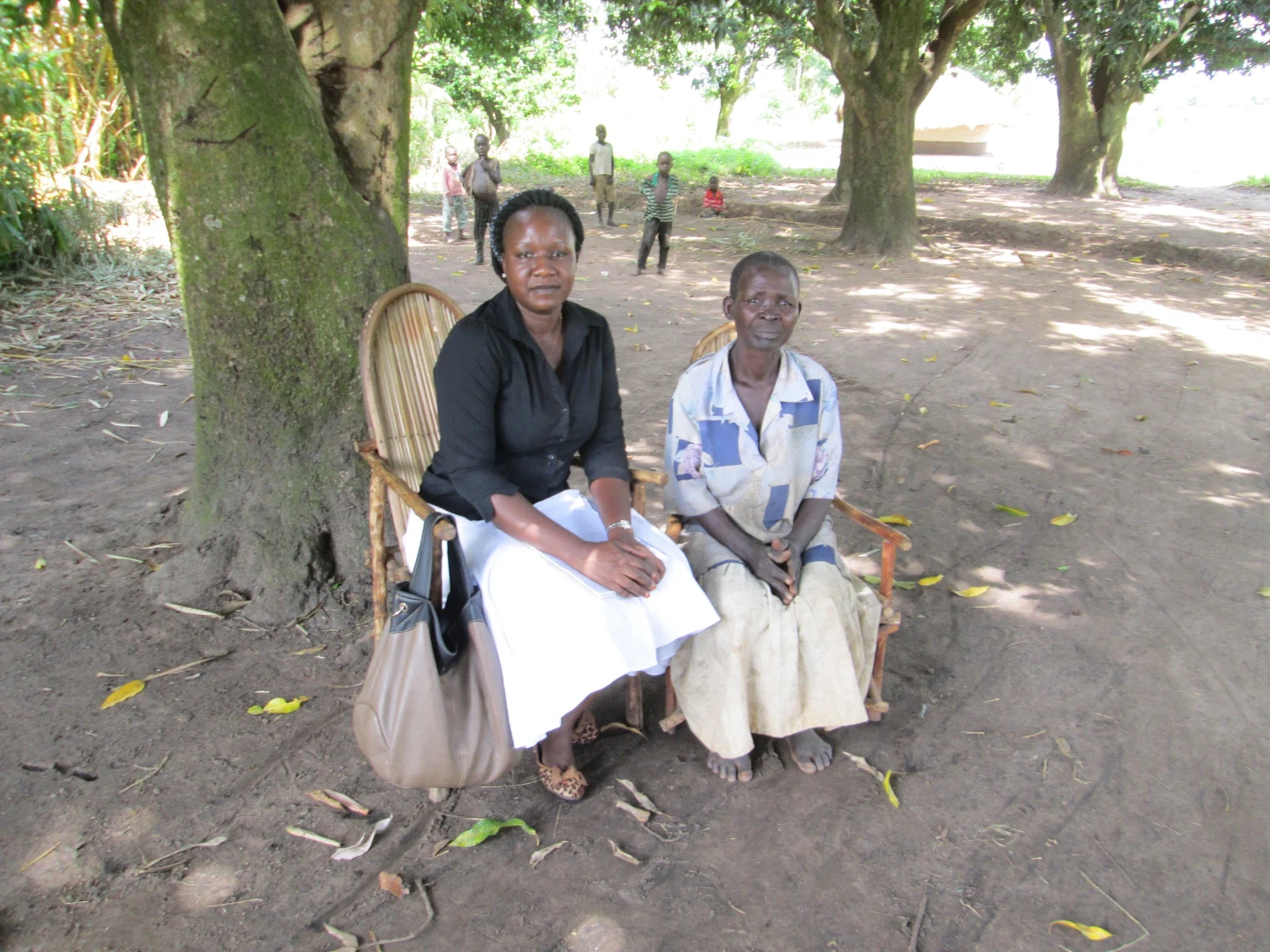
A moment of companionship during a community visit.
Standing together during a community visit.
A community that cares
Support our work
Support practical community assistance and help develop a structured elderly-care programme in Lira City.
Contributions should be agreed with the Foundation so they respond to current needs and can be received appropriately.
Our constitution provides that funds are to be used solely for the Foundation’s objectives.
Read about governance & registration ↗Programme 7 of 7 · Article 5, Objective 7
Building a locally rooted model that can support more communities over time.
The Foundation’s proposal describes long-term needs that extend beyond one household or one seasonal activity. Poverty, isolation, and barriers to care require sustained community support rather than a response that ends after an individual visit or distribution.
The gap is a model with trained local people, reliable coordination, learning, and continuing resources. Expansion also needs evidence from implementation, so growth does not outpace the ability to provide safe, meaningful care.
JAF has community roots, documented support activities, a constitution, and a proposed structured care model. Its plan identifies volunteer development, partnerships, monitoring, and a sustainability strategy as the foundations for expansion. A completed scale-up or established partner network is not claimed here.
JAF aims to develop a sustainable care model in Lira City that can be expanded to other communities in Northern Uganda. It plans to build local ownership, train volunteers, seek partnerships, document learning, and use monitoring to guide improvement and growth.
Turning the response into action
What this programme aims to change
These are intended outcomes and proposed monitoring measures, not reported results.
Help build a community where older people feel valued, included, and supported.
Our people
Meet the people helping shape the Joyce Angulo Foundation.
Founder
A retired registered nurse, Joyce has dedicated her life to vulnerable women, children, girls, persons with disabilities, and older people. Her experience of caring for families affected by poverty, conflict, and exclusion shapes the Foundation’s approach.
She has mentored women in healthcare and championed education, independence, and community-based support.
Co-founder
Pamella is a law graduate of Keele University, United Kingdom. She worked with the African Union’s ASEOWA response in Liberia, Guinea, and Sierra Leone, coordinating psychosocial support, social mobilisation, and community engagement during the Ebola outbreak.
Her interests include human rights, child protection, equality, and the participation of vulnerable people in community development.
General Manager
Barbara provides operational leadership, supports project implementation, mobilises resources, and maintains relationships with community members, partners, government authorities, and donors.
Her work focuses on organisational capacity, effective use of resources, and sustainable community development.
A community that cares
Website information
Last updated 17 October 2026
This site provides information about Joyce Angulo Foundation, its documented community activities, and proposed programmes. Programme availability depends on resources and arrangements with the Foundation.
Website content is general information, not individual medical or legal advice. Descriptions of proposed programmes do not guarantee services, funding, or eligibility for assistance.
No online payments are accepted on this website. Confirm official donation arrangements and acknowledgement procedures directly with the Foundation before transferring funds or delivering goods.
Please respect the privacy and dignity of people pictured. Seek permission from the Foundation before reusing its photographs, logo, or other material.
External websites operate under their own terms. A link does not imply a partnership or endorsement.
Send questions or requests for corrections to Joyce Angulo Foundation, Telela Village, Boroboro East Ward, Lira City, Uganda.
Accountability
Our identity, governance, and programme information should be clear and accessible.
The constitution provides for a Chairperson, Vice Chairperson, General Secretary, and Treasurer, with three-year leadership terms. It provides for General Assembly meetings at least twice a year and quarterly Executive Committee meetings.
The constitution identifies donations and grants, fundraising, and income-generating projects as funding sources. Funds are to be used solely for the Foundation’s objectives. It provides for a Foundation bank account with at least three signatories, with any two authorising transactions.
The structured elderly-care programme is a proposal seeking support. Its anticipated results are goals, not verified impact figures. Financial reports and quantified impact results have not been published on this website.
Supporters can request current registration and financial documentation directly from the Foundation.